
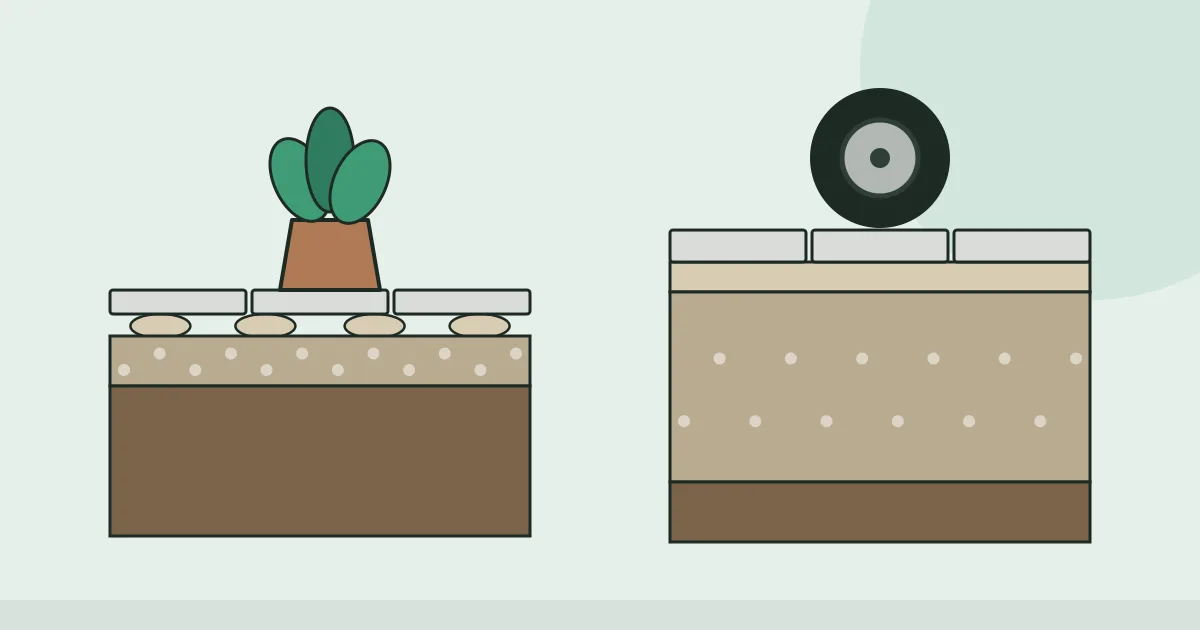
Slab paving in the UK typically costs between £2,000 and £6,000 installed, whether it's a back-garden patio or a slabbed area at the front of the house that takes a car. The biggest single factor is what the slabs are made of: concrete, natural stone or porcelain. The second is whether the area needs to carry vehicles. A patio and a slabbed driveway can look alike when finished, but the driveway needs a deeper build underneath, and the price reflects that.
This guide covers both uses, since our patios and slab paving service covers both, and explains how the material and the load change the figure.
Slab paving prices by area
Typical UK installed prices for patio and slab paving, including excavation, sub-base, bedding, slabs and pointing. Actual quotes vary with material, access and ground conditions.
| Area | Typical scope | Typical cost |
|---|---|---|
| Small patio or area | A seating area or path, standard concrete or budget stone slabs, reasonable access | £2,000 – £3,500 |
| Medium patio or slabbed driveway | A full garden patio, or a front area built to take a car, mid-range slabs | £3,500 – £5,000 |
| Large area, natural stone or porcelain | A larger patio or drive, premium natural stone or porcelain, more cutting and edge detailing | £5,000 – £6,000+ |
Patio or driveway: why the load matters
A slab in a back garden only has to carry people, furniture and the odd barbecue. A slab that a car drives over takes a concentrated load at each tyre, and a slab laid for foot traffic will crack or rock under it. A slabbed driveway therefore usually needs a deeper, well-compacted sub-base, full mortar bedding rather than spot bedding, and slabs that are thick enough or small enough in format to spread the load.
In practice, pricing a slabbed driveway at patio rates is one of the most common mistakes in this trade. If a quote for a front drive looks like a patio quote, ask what the sub-base depth and bedding are, and whether the chosen slabs are rated for vehicles. Many are only meant for foot traffic.
A back-garden patio generally doesn't need planning permission, whatever its size or material. A slabbed front driveway is treated like any other hard surface. Most concrete and porcelain slabs laid with mortar joints are impermeable, so in England more than 5 square metres draining onto the road needs permission unless the water is directed into your own garden or a soakaway. See the gov.uk guidance on paving a front garden. Rules are set separately in Scotland, Wales and Northern Ireland.
How the material moves the price
- Concrete slabs sit at the bottom of the range. They're consistent in size and colour, and riven finishes can imitate natural stone.
- Natural stone, such as sandstone, limestone or granite, costs more and varies in thickness and colour from slab to slab. That variation takes more time to lay well. Some stones also need periodic sealing, which is a small ongoing cost.
- Porcelain is dense, stain-resistant and needs very little upkeep, but it sits at the higher end for materials. It's harder to cut and, being thin, has to be bedded carefully.
- Large-format slabs of any material give a cleaner look with fewer joints. They're heavier and less forgiving to lay, so installation usually costs a little more.
Other things a slab quote should cover
- Excavation and spoil removal, particularly if an old patio or concrete base is coming out.
- Falls. The finished surface should shed water away from the house and stay clear of the damp-proof course.
- Pointing. Traditional mortar and brush-in jointing compounds differ in price and in how long they last.
- Access. In a back garden with no side gate, every slab and bag of sub-base goes through the house or over a wall, which adds labour.
Slabs against the other surfaces
For a front drive, slabs are usually compared with block paving. Blocks are smaller units designed for vehicle loads and typically cope better with turning tyres. Slabs can give a more contemporary, open look, particularly in porcelain. For a patio, slabs are the default choice. Our guide to the types of driveway sets slabs against the other five surfaces, and the driveway surface cost calculator gives a ballpark for each at your size.
Frequently asked questions
Is a slabbed driveway cheaper than block paving?
Not necessarily. Budget concrete slabs can come in below block paving, but once the deeper sub-base and full bedding a driveway needs are included, the two often end up in a similar range. Porcelain or natural stone on a driveway usually costs more than standard concrete block paving.
Can I drive on patio slabs?
Only if they're laid for it. Slabs laid on a patio sub-base with spot bedding will usually crack or rock under a car. A slabbed driveway needs a deeper compacted sub-base, full mortar bedding and slabs thick enough, or small enough, to carry the load. Check the manufacturer's guidance for vehicle use before choosing a slab for a drive.
How long does slab paving last?
A well-laid patio on a proper sub-base typically lasts 20 years or more. Most problems over time come from failed pointing or a settled sub-base rather than the slabs themselves wearing out.
Does porcelain paving need sealing?
Generally no. Porcelain is very low in porosity, so it resists staining without a sealer. Some natural stones, particularly more porous sandstones and limestones, can benefit from periodic sealing. That's worth factoring into the running costs if you choose them.
Ready to talk to a patios and slab paving specialist?
Get Free Quotes →