
What Is a Resin Bound Driveway?
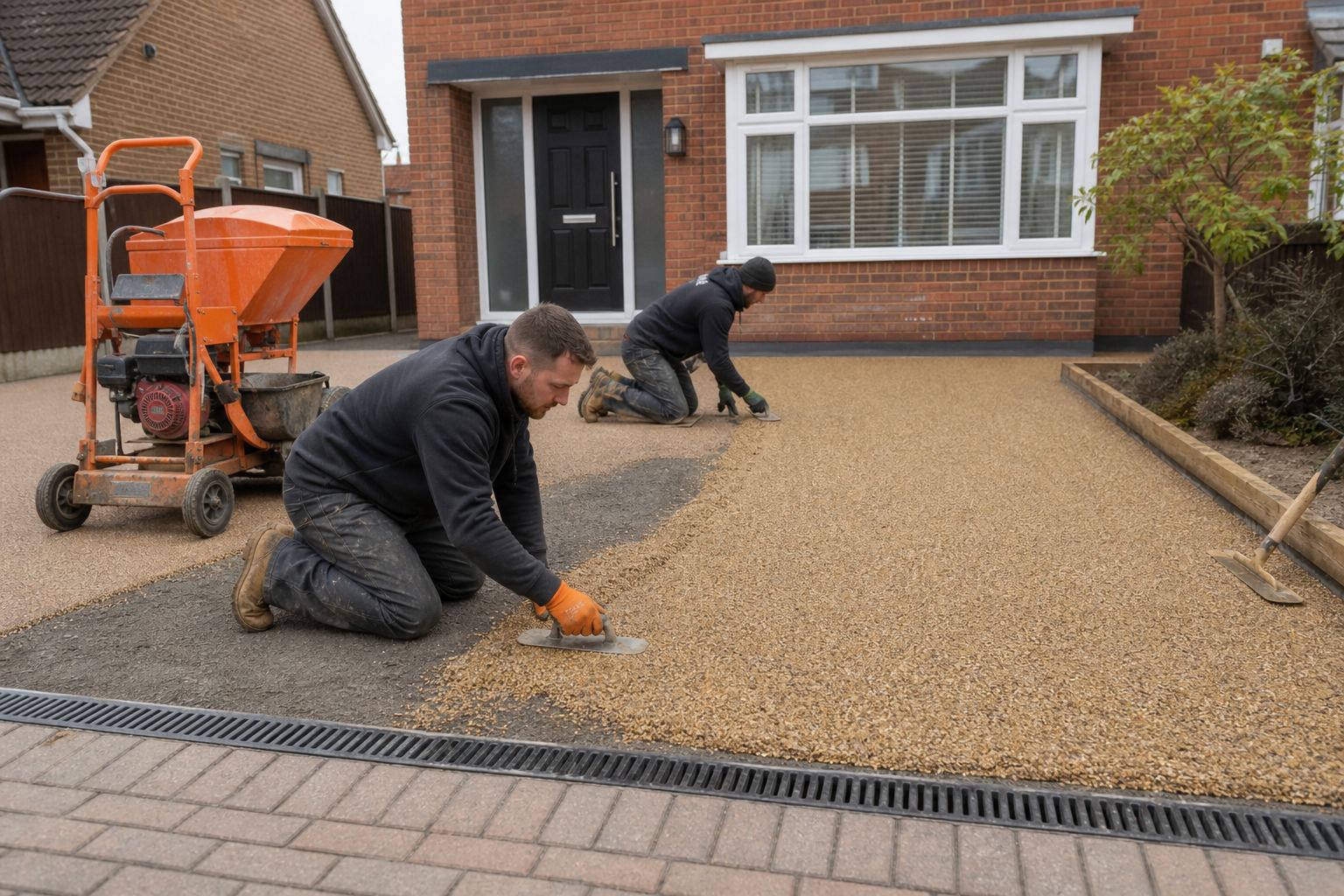
A resin bound driveway is a smooth, seamless surface made by mixing natural aggregate stone with a clear resin binder and trowelling it over a solid, prepared base — typically tarmac or concrete — to a depth of around 15–18mm. Because the stone and resin are mixed together before laying rather than the resin being poured on top of loose stone, the finished surface is fully bonded, walkable in flat shoes, and doesn't shed loose stones the way gravel or "resin bonded" surfaces can.
A lot of homeowners choose resin bound because they want a modern, low-maintenance finish that still lets rainwater drain through, without the loose-stone downsides of gravel or the harder look of tarmac. It's also become a popular choice specifically because of its permeability, which can make a real difference to whether planning permission is needed.
Signs You Need a New Resin Bound Driveway
- An existing resin surface that's gone patchy, faded unevenly or lost its glossy finish
- Cracking that's come through from a failed or moving base layer underneath
- Ponding or slow drainage, which usually means the resin has been laid too thick or the base has lost its fall
- An old tarmac or concrete driveway that's structurally sound but looking tired and worth resurfacing
- Loose stone or a "crunchy" texture underfoot, which points to poorly mixed resin bonded (not resin bound) product
Whether an old drive can stay as the base for resin is the question that most affects the price. Our driveway warning signs checklist helps you tell a tired but sound surface from one whose base has failed.
Resin Bound Driveway Options Explained
Most of the choice in a resin bound driveway comes down to aggregate and application, rather than the resin system itself:
- Aggregate colour and size — natural stone aggregates come in a wide range of colours and grades, from fine, subtle blends to bolder, larger stone for a more textured look.
- New base installation — where there's no suitable existing surface, a new tarmac or concrete base is laid first, adding to both cost and installation time.
- Resurfacing an existing base — if the existing tarmac or concrete driveway is structurally sound, resin bound can often be laid straight over it, which is quicker and cheaper than starting from scratch.
It's worth being clear on the difference between resin bound and resin bonded — bonded surfaces have the stone scattered and pressed onto a layer of resin, which looks similar at first but tends to shed loose stones and isn't considered permeable in the same way.
Still comparing surfaces? Our guide to the types of driveway sets resin bound against tarmac, block paving, gravel, slabs and concrete.
What to Include When Asking for a Quote
Give a rough size and sketch of the area, what surface is there now, and how you intend to use the finished space, since this is what most quotes are actually priced against. Flag anything that could affect access — a narrow side entrance, overhead cables, a shared driveway — and mention drains or level changes nearby, so quotes for different surface materials are actually comparing like for like.
For resin bound driveways, have the contractor confirm in writing exactly which system and materials are being used, since specifications vary between suppliers. The spec should cover the sub-base depth, edge restraints or kerb line, how the finished surface manages rainwater, and whether reinstatement of the surrounding lawn, fencing or paving is included.
When comparing quotes side by side, check they're covering the same ground: excavation depth, sub-base specification, surface material, edging and drainage should all be named, not folded into a single price per square metre. Ask each contractor to confirm separately whether spoil removal, permits and reinstatement around the edges are included, since this is where otherwise-similar quotes can differ most.
How Much Does a Resin Bound Driveway Cost?
| Job scope | Typical cost |
|---|---|
| Resurfacing existing base (small) | £3,500 – £5,000 |
| Resurfacing existing base (medium/large) | £5,000 – £6,500 |
| New base plus resin bound surface | £6,500 – £8,000+ |
These figures are a general guide — whether a new base needs to be laid first is usually the biggest single factor in the final price, followed by area size and aggregate choice. Get a few quotes so you can compare like-for-like specifications. Our resin bound driveway cost guide explains how to tell whether your drive can be resurfaced or needs a new base, and the driveway surface cost calculator compares resin with the other surfaces.
The Resin Bound Driveway Process: What to Expect
- Site survey. The contractor assesses the existing surface to confirm whether it's suitable to resurface directly or needs a new base laid first.
- Base preparation. Any new tarmac or concrete base is laid and left to cure, or an existing suitable base is cleaned and repaired as needed.
- Priming. A primer is applied to the base to help the resin bound layer bond securely.
- Mixing and laying. Aggregate and resin are mixed on site in the correct ratio, then trowelled across the surface by hand to an even depth.
- Curing. The surface is left to cure, usually walkable within a few hours and ready for vehicles within 24–48 hours depending on weather.
Planning Permission for a Resin Bound Driveway
Resin bound surfacing is porous by design — water passes through the resin and stone matrix into the base beneath rather than running off the surface — so it's classed as a permeable surface for planning purposes. That means a new resin bound driveway in a front garden is generally exempt from the 5 square metre planning permission threshold that applies to impermeable surfaces like tarmac or standard block paving, regardless of the total area. It's worth double-checking with your installer that the specific base build-up they're using is genuinely permeable, since a resin bound surface laid over a fully sealed, non-draining base can lose some of that benefit. A dropped kerb for vehicle access across the pavement still needs separate consent from the council. See the gov.uk guidance on paving a front garden for the full rules.
How to Choose a Resin Bound Driveway Installer
- Ask whether the surface will be resin bound or resin bonded — the two look similar in photos but perform very differently
- Check whether your existing base needs any repair before resurfacing, and who's responsible for that work
- Confirm the resin system and aggregate brand being used, and ask for a sample if you're unsure about colour
- Ask what guarantee is offered against cracking, fading or delamination from the base
- Get at least two quotes and check both specify the same depth of resin bound material (usually 15–18mm)
Frequently Asked Questions
Does a resin bound driveway need planning permission?
Usually not. Resin bound surfacing is permeable, so a new resin bound driveway in a front garden is generally exempt from the planning permission threshold that applies to impermeable surfaces, regardless of size.
What's the difference between resin bound and resin bonded?
Resin bound mixes the stone and resin together before laying, giving a smooth, fully bonded surface that doesn't shed stones. Resin bonded scatters loose stone onto a layer of resin, which can look similar but tends to lose stones over time and isn't considered permeable in the same way.
Can resin bound be laid over my existing driveway?
Often, yes, provided the existing tarmac or concrete base is structurally sound and free of major cracking or movement. This is usually cheaper and quicker than installing a completely new base first.
How much does a resin bound driveway cost on average?
Most UK resin bound driveways cost between £3,500 and £8,000, depending on area size and whether a new base needs to be laid. Get a free quote from local installers for an exact price.