
What Is an Asphalt or Tarmac Driveway?
An asphalt or tarmac driveway is a hard-wearing surface made from crushed stone bound together with bitumen, laid hot over a compacted sub-base and rolled flat to form a smooth, dark grey finish. It's one of the most common driveway surfaces in the UK, largely because it's quick to install, handles daily car traffic without fuss, and costs less per square metre than most paved alternatives.
A new tarmac driveway usually gets booked in when the existing surface has started cracking, sinking or pooling water after rain. Because tarmac is laid as one continuous surface rather than individual units, a driveway that's gone past its best is rarely worth patching — a full strip-out and relay tends to be the more sensible long-term fix.
Signs You Need a New Asphalt or Tarmac Driveway
- Cracking across the surface, especially spreading "crazy paving" style cracks rather than one clean line
- Potholes or sunken patches where the sub-base underneath has failed
- Standing water after rain, which points to poor drainage or a surface that's lost its camber
- Loose stone or a crumbly, gravelly texture where the binder has worn away
- Edges breaking away or crumbling where the driveway meets the lawn or a wall
Not every one of these means digging the whole drive out — a faded, worn surface is a different problem from crazed cracking and sinking. Our driveway warning signs checklist explains how to tell a tired surface from a failed base.
Asphalt and Tarmac Driveway Options Explained
There are two main products used on domestic driveways, and the choice usually comes down to budget and how the surface will be finished:
- Dense bitumen macadam (tarmac) — the standard choice for most driveways. It's laid in one or two courses over a compacted sub-base and rolled while hot, giving a durable, low-maintenance surface that's ready to use within a day or two of laying.
- Open-textured asphalt / SMA — a slightly more premium mix with a finer, closer finish, sometimes chosen where a neater edge or a specific colour (red or black) is wanted.
Whichever surface course is used, the sub-base underneath is what really determines how long the driveway lasts — a properly excavated and compacted stone sub-base matters more to longevity than the top layer itself.
If you haven't settled on tarmac yet, our guide to the types of driveway compares it with gravel, block paving, slabs, resin bound and concrete on price, lifespan and upkeep.
What to Include When Asking for a Quote
Give a rough size and sketch of the area, what surface is there now, and how you intend to use the finished space, since this is what most quotes are actually priced against. Flag anything that could affect access — a narrow side entrance, overhead cables, a shared driveway — and mention drains or level changes nearby, so quotes for different surface materials are actually comparing like for like.
For asphalt/tarmac driveways, have the contractor confirm in writing exactly which system and materials are being used, since specifications vary between suppliers. The spec should cover the sub-base depth, edge restraints or kerb line, how the finished surface manages rainwater, and whether reinstatement of the surrounding lawn, fencing or paving is included.
When comparing quotes side by side, check they're covering the same ground: excavation depth, sub-base specification, surface material, edging and drainage should all be named, not folded into a single price per square metre. Ask each contractor to confirm separately whether spoil removal, permits and reinstatement around the edges are included, since this is where otherwise-similar quotes can differ most.
How Much Does an Asphalt or Tarmac Driveway Cost?
| Driveway size | Typical cost |
|---|---|
| Small (single car) | £2,500 – £3,800 |
| Medium (2 cars) | £3,800 – £5,000 |
| Large / full width, extensive groundwork | £5,000 – £6,000+ |
These are indicative UK averages only — the final price depends on the size and shape of the area, how much excavation and sub-base preparation is needed, drainage requirements and access for machinery. Get a few quotes from local contractors to see what it'll actually cost for your driveway. For a fuller breakdown of where the money goes, read our tarmac driveway cost guide, or use the driveway surface cost calculator to compare tarmac with the other surfaces at your size.
The Tarmac Driveway Process: What to Expect
- Site survey and quote. A contractor measures up, checks levels and drainage, and confirms the sub-base depth needed for your ground conditions.
- Excavation. The existing surface and enough of the ground underneath is dug out to make room for the new sub-base.
- Sub-base and edging. Crushed stone is laid and compacted in layers, and edging (kerbs, block paving strips or similar) is fitted to contain the tarmac.
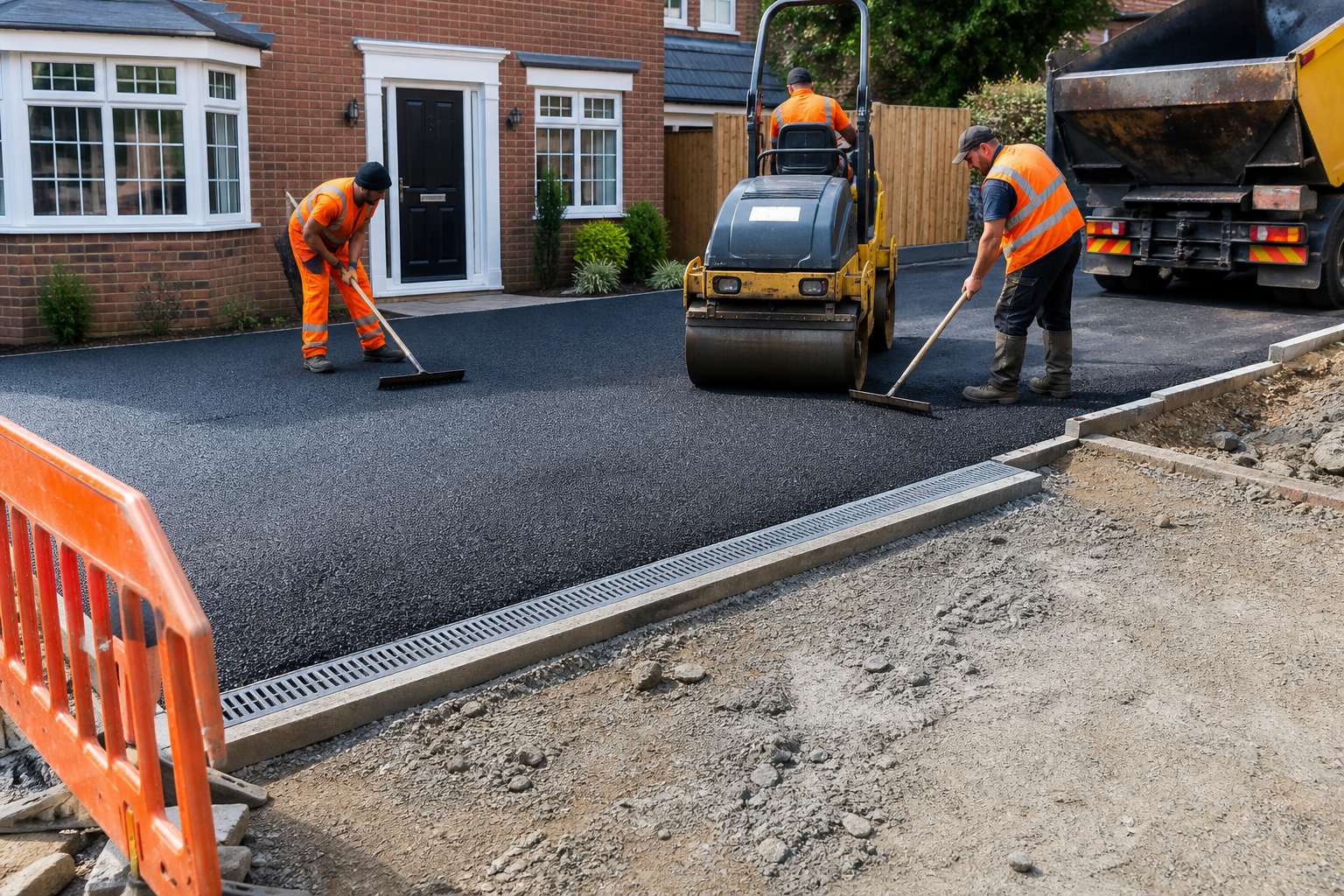
- Laying the tarmac. The hot tarmac is laid and rolled, usually in a base course followed by a top course, to the correct camber for drainage.
- Curing and handover. The surface hardens over the following days — most contractors advise keeping vehicles off it for at least 48–72 hours while it fully cures.
Planning Permission for a Tarmac Driveway
Tarmac is an impermeable surface, and that matters for planning permission. In England, if you're laying more than 5 square metres of new impermeable surfacing in a front garden and it drains onto the pavement or road rather than into your own garden or a soakaway, you'll need planning permission before work starts. Below 5 square metres, or where the tarmac is designed to drain onto a permeable area of your own garden, it's normally covered by permitted development. Rules differ slightly in Scotland and Wales, and if your property is listed or in a conservation area it's worth checking with the council regardless of size. You'll also usually need separate permission from the council's highways team for a dropped kerb where the driveway meets the road. See the gov.uk guidance on paving a front garden for the full detail.
How to Choose a Tarmac Driveway Contractor
- Ask what sub-base depth they'll use and whether it's suited to your soil type
- Check whether the quote includes excavation, edging and disposal of the old surface, or if these are extra
- Confirm how drainage will be handled, especially if the driveway needs planning permission for run-off
- Ask for photos of previous tarmac driveways they've laid, ideally ones a few years old so you can see how they've worn
- Check they carry public liability insurance and get at least two written quotes to compare
Frequently Asked Questions
How long does a tarmac driveway last?
A well-installed tarmac driveway typically lasts 15–20 years before it needs resurfacing, though this depends heavily on sub-base quality, drainage and how much weight it regularly carries.
Is tarmac cheaper than block paving?
Generally yes. Tarmac is usually one of the more affordable driveway surfaces per square metre, mainly because it's laid quickly as one continuous surface rather than unit by unit like block paving. See our guide to the types of driveway for a full side-by-side comparison.
How soon can I drive on a new tarmac driveway?
Most contractors recommend waiting at least 48–72 hours before driving on a newly laid tarmac driveway, and avoiding turning the steering wheel on the spot while it's still fresh.
Do I need planning permission for a tarmac driveway?
Only in some cases. In England, you'll need planning permission if you're laying more than 5 square metres of new tarmac in a front garden that drains onto the road rather than your own garden or a soakaway. Below that size, or with proper drainage, it's usually permitted development.