
What Is Block Paving?
Block paving is a driveway surface built from individual concrete or clay blocks, laid by hand on a compacted sand and stone sub-base in a chosen pattern, then vibrated together and finished with jointing sand between each block. It's one of the most popular driveway finishes in the UK because of how customisable it is — colour, block size and laying pattern can all be mixed and matched to suit the property, and if a block ever gets damaged it can be lifted and replaced without disturbing the rest of the driveway.
Block paving tends to get chosen when kerb appeal matters as much as practicality — it's the surface most likely to be picked for a period property or anywhere the driveway is a big part of the front garden's look, rather than purely a functional parking space.
Signs You Need New Block Paving
- Blocks sinking, rocking or sitting unevenly, usually a sign the sub-base underneath has failed
- Weeds or moss growing persistently between the joints despite regular re-sanding
- Jointing sand washing out, leaving gaps between blocks that widen over time
- Cracked, chipped or badly faded blocks, especially on older concrete block paving
- Pooling water after rain, which can point to a settled sub-base or blocked drainage
Because blocks can be lifted and relaid, a sunken or damaged area doesn't always mean a whole new drive. Our driveway warning signs checklist helps you judge when local repairs stop being worth it.
Block Paving Options Explained
Block paving comes in a wide range of materials and layouts, and the main choices are:
- Concrete block paving — the most common and cost-effective option, available in a huge range of colours, textures and finishes, including styles designed to mimic natural stone.
- Clay pavers — a more premium choice with rich, consistent colour that doesn't fade the way concrete can, though it typically costs more per square metre.
- Permeable block paving — blocks laid with wider joints filled with permeable jointing material, allowing water to drain through rather than run off, which can matter for planning permission (see below).
Laying pattern also affects both look and cost — a simple running bond or stretcher pattern is quicker and cheaper to lay than a herringbone or basketweave pattern, which needs more cutting and takes longer.
To see how block paving stacks up against tarmac, resin bound and the other surfaces, read our guide to the types of driveway.
What to Include When Asking for a Quote
Give a rough size and sketch of the area, what surface is there now, and how you intend to use the finished space, since this is what most quotes are actually priced against. Flag anything that could affect access — a narrow side entrance, overhead cables, a shared driveway — and mention drains or level changes nearby, so quotes for different surface materials are actually comparing like for like.
For block paving driveways, have the contractor confirm in writing exactly which system and materials are being used, since specifications vary between suppliers. The spec should cover the sub-base depth, edge restraints or kerb line, how the finished surface manages rainwater, and whether reinstatement of the surrounding lawn, fencing or paving is included.
When comparing quotes side by side, check they're covering the same ground: excavation depth, sub-base specification, surface material, edging and drainage should all be named, not folded into a single price per square metre. Ask each contractor to confirm separately whether spoil removal, permits and reinstatement around the edges are included, since this is where otherwise-similar quotes can differ most.
How Much Does Block Paving Cost?
| Driveway size | Typical cost |
|---|---|
| Small (single car) | £3,000 – £4,500 |
| Medium (2 cars) | £4,500 – £6,000 |
| Large, feature pattern or clay pavers | £6,000 – £7,000+ |
These figures are indicative only — block type, laying pattern, edging and how much groundwork is needed all affect the final price. It's worth getting a few quotes so you can compare like-for-like specifications rather than just the bottom-line number. Our block paving cost guide explains how pattern, block type and shape change the price, and the driveway surface cost calculator gives a quick comparison with other surfaces.
The Block Paving Process: What to Expect
- Site survey and design. The contractor measures the area, discusses block choice, colour and pattern, and confirms drainage requirements.
- Excavation. The existing surface is removed and the ground dug out to the correct depth for the sub-base and block layer.
- Sub-base and edging. Crushed stone is laid and compacted, and edging courses are set in concrete to contain the paving.
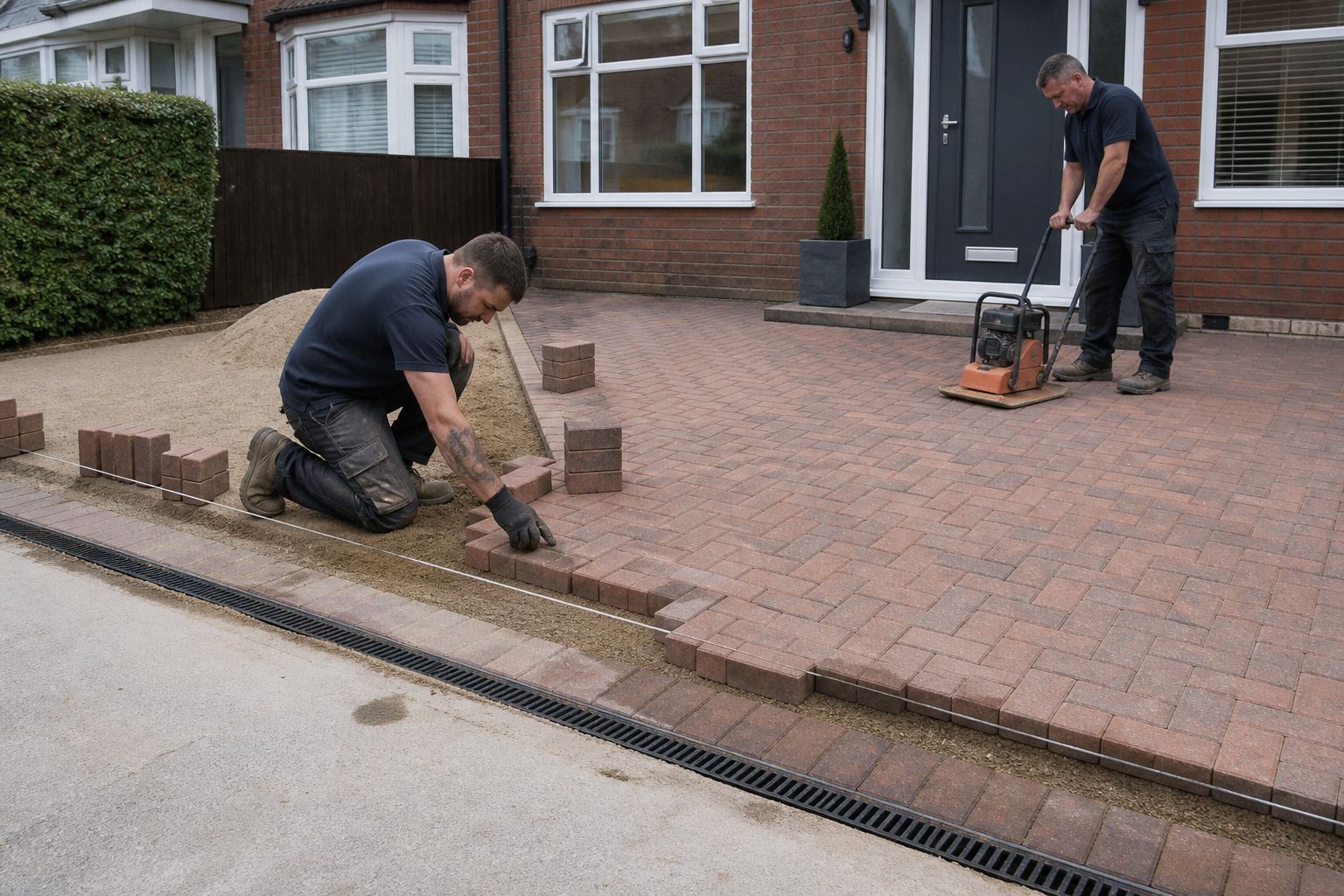
- Laying the blocks. A sand bedding layer is screeded flat, then the blocks are laid by hand to the chosen pattern and cut to fit around edges.
- Compaction and jointing. The whole surface is vibrated to bed the blocks in, then jointing sand is brushed into the gaps to lock everything together.
Planning Permission for Block Paving
Standard block paving with sand-filled joints is treated as an impermeable surface, which means the usual planning rules apply in England: laying more than 5 square metres of it in a front garden, where it drains onto the pavement or road, requires planning permission. Below that size, or where the driveway drains onto your own garden or a soakaway rather than the road, it's normally permitted development without needing to apply. The exception is permeable block paving, laid with open joints that let water soak through — because it's not classed as impermeable, it's generally exempt from the 5 square metre rule in the same way gravel and resin bound surfaces are. If you're not sure which category your chosen block paving falls into, ask the installer directly, and check the gov.uk guidance on paving a front garden. A dropped kerb for vehicle access is a separate consent from the council's highways team.
How to Choose a Block Paving Contractor
- Ask what sub-base depth and edging method they use, and whether it's suited to a driveway carrying regular vehicle weight
- Check whether the quote is for standard or permeable block paving, since this affects both look and planning requirements
- Confirm the laying pattern and block colour in writing before work starts to avoid surprises
- Ask to see completed driveways, ideally a few years old, to check how well the blocks have held their colour and level
- Get at least two quotes and confirm both include excavation, edging and disposal of the old surface
Frequently Asked Questions
Does block paving need planning permission?
It depends on the type. Standard block paving is impermeable, so more than 5 square metres in a front garden draining onto the road needs planning permission in England. Permeable block paving, laid with open joints, is generally exempt in the same way gravel is.
How long does block paving last?
A well-installed block paving driveway typically lasts 20–25 years, and individual damaged blocks can be lifted and replaced without redoing the whole surface.
Can I repair a damaged block instead of replacing the whole driveway?
Yes, that's one of the main advantages of block paving. A cracked or sunken block can usually be lifted, the sub-base beneath it corrected if needed, and the block reset or swapped for a spare, without disturbing the rest of the driveway.
How much does block paving cost on average?
Most UK block paving driveways cost between £3,000 and £7,000, depending on size, block type and laying pattern. Get a free quote from local installers for an exact price.