
What Is a Gravel Driveway?
A gravel driveway is a loose stone surface — usually a decorative aggregate like golden gravel, granite chippings or shingle — laid over a compacted sub-base and held in place with edging and, in most modern installs, a plastic or honeycomb grid that stops the stones from migrating and rutting under wheels. It's one of the cheapest and quickest driveway surfaces to install, and one of the few that's naturally permeable without any extra work.
Gravel gets chosen a lot by people who want a decent-looking driveway without the cost of paving or tarmac, or because the property is in a conservation area where a more "natural" surface fits the setting better. It also suits anyone who'd rather avoid the planning permission headaches that come with impermeable surfaces.
Signs You Need a New Gravel Driveway
- Ruts, potholes or bald patches where gravel has been displaced by tyres over time
- Gravel migrating onto the lawn, pavement or road because the edging has failed or was never fitted
- Weeds pushing up through the stones, usually a sign the membrane underneath has torn or was never laid
- The sub-base showing through in patches, meaning the gravel layer has thinned out unevenly
- Standing water or a muddy surface after rain, pointing to a poor or missing sub-base
Ruts and scattered stone can sometimes be fixed with a top-up and new edging, but mud and standing water usually mean the build underneath needs redoing. Our driveway warning signs checklist covers how to tell the difference.
Gravel Driveway Options Explained
Most gravel driveways today are built around one of two approaches:
- Loose gravel over membrane — a weed-suppressant membrane is laid over the compacted sub-base, then topped with a layer of decorative stone. It's the cheaper option but more prone to rutting under regular vehicle use.
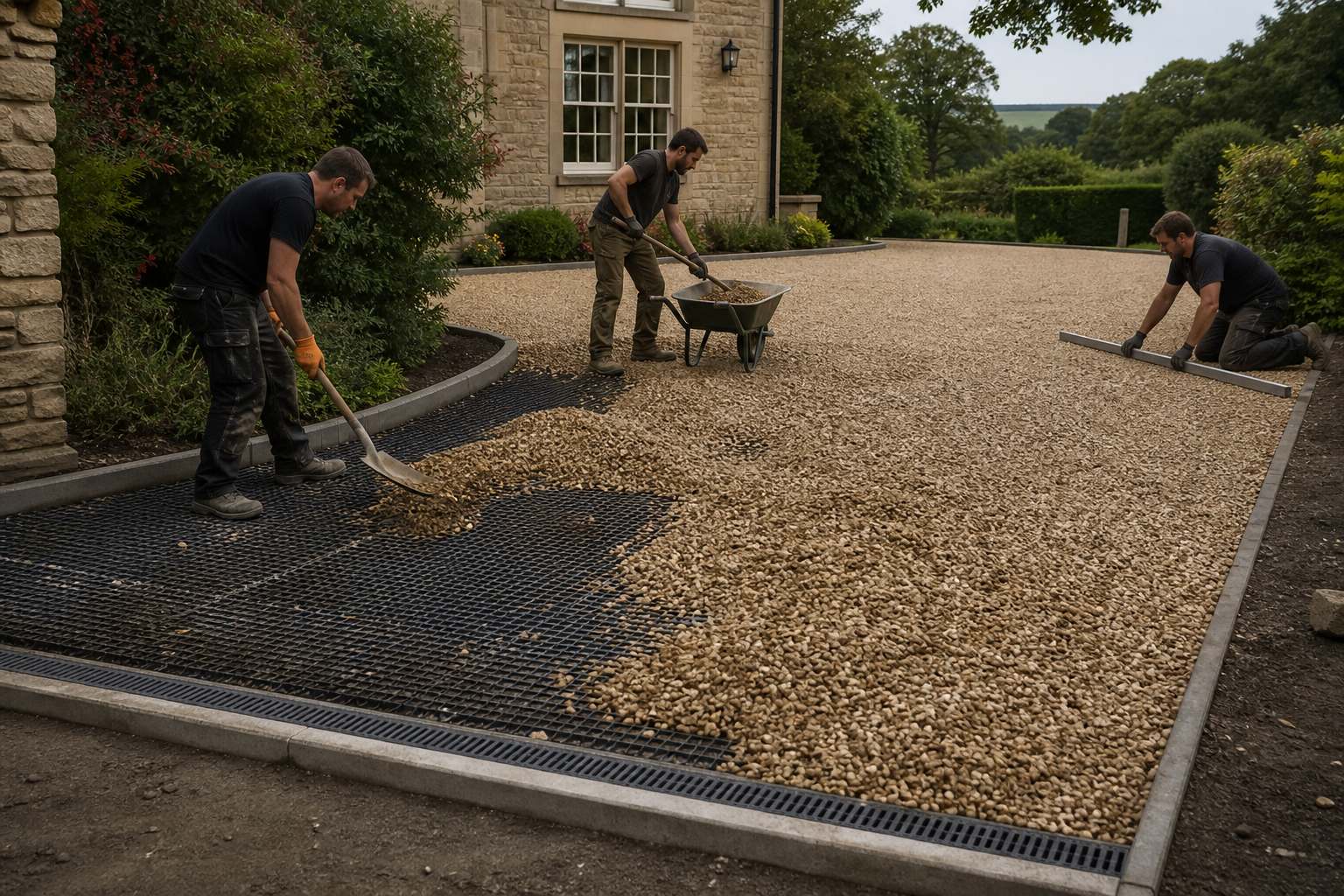
- Gravel with a stabilisation grid — interlocking plastic or resin grids are laid on the sub-base and filled with gravel, locking the stones in place. This is the better choice for a daily-use driveway since it stops the classic gravel problems of rutting, spreading and bald patches.
Stone choice also affects how the driveway looks and behaves day to day — angular chippings like granite lock together and stay put better than smooth, rounded pea shingle, which tends to shift more underfoot and under tyres.
Weighing gravel against a bound surface? Our guide to the types of driveway sets out the trade-offs between all six common options.
What to Include When Asking for a Quote
Give a rough size and sketch of the area, what surface is there now, and how you intend to use the finished space, since this is what most quotes are actually priced against. Flag anything that could affect access — a narrow side entrance, overhead cables, a shared driveway — and mention drains or level changes nearby, so quotes for different surface materials are actually comparing like for like.
For gravel driveways, have the contractor confirm in writing exactly which system and materials are being used, since specifications vary between suppliers. The spec should cover the sub-base depth, edge restraints or kerb line, how the finished surface manages rainwater, and whether reinstatement of the surrounding lawn, fencing or paving is included.
When comparing quotes side by side, check they're covering the same ground: excavation depth, sub-base specification, surface material, edging and drainage should all be named, not folded into a single price per square metre. Ask each contractor to confirm separately whether spoil removal, permits and reinstatement around the edges are included, since this is where otherwise-similar quotes can differ most.
How Much Does a Gravel Driveway Cost?
| Driveway size | Typical cost |
|---|---|
| Small (single car) | £1,200 – £2,200 |
| Medium (2 cars) | £2,200 – £3,200 |
| Large, with stabilisation grid throughout | £3,200 – £4,000+ |
These figures are a rough guide rather than a fixed price — stone type, whether a stabilisation grid is used, and how much excavation and edging is needed will all change the final cost. Local contractors can give you a firm price once they've seen the site. Our gravel driveway cost guide explains what moves a quote between these bands, including the running cost of topping up, and the driveway surface cost calculator compares gravel with the other surfaces.
The Gravel Driveway Process: What to Expect
- Site survey and quote. The contractor checks ground conditions, existing drainage and confirms stone type and edging with you.
- Excavation. The area is dug out to the depth needed for the sub-base, gravel layer and, if used, the stabilisation grid.
- Sub-base and edging. Crushed stone is compacted in layers and edging is fitted around the perimeter to contain the gravel.
- Membrane or grid installation. A weed-suppressant membrane is laid, with a stabilisation grid on top if specified.
- Spreading and levelling the gravel. The chosen stone is spread, raked level and compacted to the finished depth, usually around 30–50mm.
Planning Permission for a Gravel Driveway
Gravel is a permeable surface — rainwater drains through the stones and the membrane beneath rather than running off into the street — so a new gravel driveway in a front garden is generally exempt from needing planning permission, regardless of size, provided it genuinely drains freely and isn't laid over a solid, sealed base. That's one of the main reasons it's a popular choice where an impermeable surface like tarmac or block paving would trigger the 5 square metre rule. You'll still usually need separate permission for a dropped kerb if you're creating vehicle access across a pavement, and listed buildings or conservation areas can carry their own restrictions, so it's worth a quick check with the council if either applies. See the gov.uk guidance on paving a front garden for more detail.
How to Choose a Gravel Driveway Installer
- Ask whether a stabilisation grid is included, and how it affects both price and durability
- Check what depth of sub-base and gravel is being quoted for — a shallow build is a common way to cut corners
- Confirm what edging will be used to stop gravel spreading onto the lawn or pavement
- Ask to see examples of gravel driveways they've completed, ideally a couple of years old, to judge how well they've held up
- Get at least two written quotes and check both include the same scope of groundwork
Frequently Asked Questions
Does a gravel driveway need planning permission?
Usually not. Gravel is a permeable surface, so a new gravel driveway in a front garden is generally exempt from planning permission regardless of size, as long as it drains freely rather than being laid over a sealed base.
How long does a gravel driveway last?
With a proper sub-base and stabilisation grid, a gravel driveway can easily last 15–20 years, though the top layer of stone may need topping up every few years as it compacts and settles.
Does gravel need topping up over time?
Yes, most gravel driveways need a top-up of stone every 3–5 years to replace material lost to compaction, wind and general wear, especially in areas with heavy footfall or vehicle turning.
How much does a gravel driveway cost on average?
Most UK gravel driveways cost between £1,200 and £4,000, depending on size, stone choice and whether a stabilisation grid is used. Get a free quote from local installers for an exact price.