
A new gravel driveway in the UK typically costs between £1,200 and £4,000 installed, which makes it the cheapest of the six surfaces we cover. The low starting price is real, but the range is wide for a reason. A small loose-stone drive over a membrane and a large drive with a stabilisation grid throughout are different jobs, and the difference between them decides how the drive behaves after a couple of winters of daily use.
Below you'll find the price bands by size, the handful of decisions that move a gravel quote up or down, and what it costs to keep the drive looking right once it's down. Our main gravel driveways page covers the installation process step by step.
Gravel driveway prices by size
Typical UK installed prices for a new gravel driveway, covering excavation, sub-base, edging, membrane or grid, and stone. Actual quotes vary with region, stone choice and ground.
| Driveway size | Typical scope | Typical cost |
|---|---|---|
| Small (single car) | Excavation, compacted sub-base, timber or block edging, weed membrane and a layer of decorative stone | £1,200 – £2,200 |
| Medium (two cars) | The same build over a larger area, often with a grid under the wheel tracks and turning area | £2,200 – £3,200 |
| Large, with grid throughout | A full frontage or long drive, stabilisation grid across the whole area, more edging and more stone | £3,200 – £4,000+ |
The three decisions that set the price
Gravel quotes vary less on labour than tarmac or paving quotes do, because there's no specialist laying skill in spreading stone. The money moves with three choices:
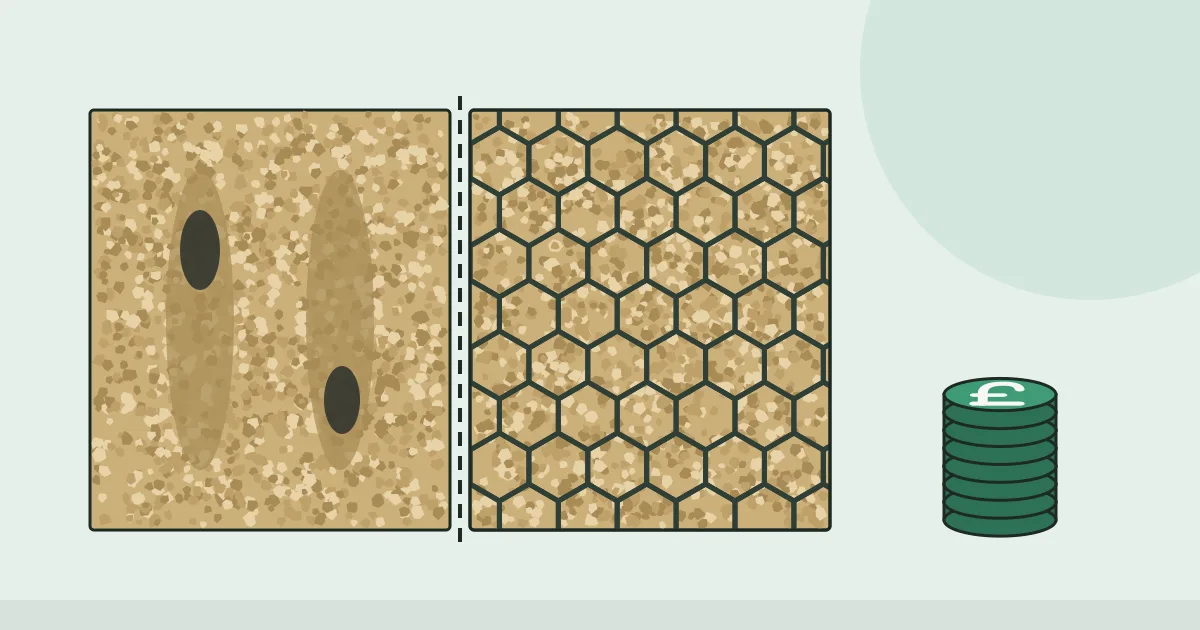
- Grid or no grid. Laying gravel over a membrane alone is cheaper. Adding interlocking plastic stabilisation grids, filled with stone, costs more but stops the ruts, bald patches and migrating stones that daily driving produces. For a drive that sees cars every day, the grid is usually where the extra money is best spent.
- Stone type. Angular chippings such as granite lock together and stay put better than rounded pea shingle. Decorative stone in unusual colours costs more per tonne than local aggregate, and delivery distance matters because gravel is heavy.
- Edging. Loose stone needs containing on every side, or it ends up on the lawn and the pavement. Treated timber boards are the cheapest edge, and a row of block setts or kerbs bedded in concrete is the most durable. A long, curving drive needs a lot of edging.
Watch for quotes that spread stone straight onto levelled soil or a thin skim of hardcore. The stones will sink into soft ground and tyre tracks will form within months. The sub-base is still the structural part of a gravel drive, just as it is for tarmac or paving, so ask for its depth to be written down.
Running costs: topping up
Gravel is the one surface where it's worth budgeting for upkeep from day one. Stone gets pushed aside, carried off on tyres and shoes, and slowly pressed down. Most gravel driveways need a top-up every three to five years, more often where cars turn on the spot. That's typically a delivery of stone and an afternoon with a rake rather than a contractor's visit, but it's a real cost over the life of the drive. A gridded drive loses stone more slowly, which is part of what the grid pays for.
Gravel and planning permission
Gravel drains through, so in England a gravel drive in a front garden is generally exempt from the 5 square metre planning rule that applies to impermeable surfaces, whatever its size. That only holds if it genuinely drains freely and isn't laid over a sealed base. It can save both an application and the cost of a drainage channel, and it's one of the main reasons people pick gravel over tarmac or standard block paving. See the gov.uk guidance on paving a front garden for the rule, and check with your council in Scotland, Wales or Northern Ireland, where it's set separately. A dropped kerb is still a separate council consent.
How gravel compares
A small gravel drive can cost less than half the price of the same area in resin bound or clay block paving. The trade-off is a surface that's noisier underfoot, harder to push a buggy or wheelie bin across, and never quite as tidy as a bound one. For long rural drives the saving grows with every metre, which is why gravel dominates there. Our guide to the types of driveway compares all six surfaces, and the driveway surface cost calculator will give you a rough figure for each at your size.
Frequently asked questions
Is a gravel driveway cheaper than tarmac?
Usually, yes. Gravel typically starts at around £1,200 for a single-car drive against around £2,500 for tarmac, because there's no hot-laid surface and less specialist machinery. The gap narrows once a stabilisation grid and heavy-duty edging are added across a large area.
Do I need a stabilisation grid under my gravel?
Not always, but it's usually worth it on a drive that's driven on every day. Without one, tyres push the stone into ruts and bald patches, especially where cars turn. A grid holds the stone in cells so the surface stays level. On a lightly used drive or a path, a membrane alone is often enough.
How deep should the gravel be on a driveway?
The finished layer of decorative stone is typically around 30–50mm. Much deeper than that and the stone becomes loose and hard to walk or drive on. The real depth of a gravel drive is in the compacted sub-base underneath, which your contractor should size to suit the ground.
Can I lay a gravel driveway myself to save money?
A small drive on firm ground is within reach of a capable DIYer, and labour is a meaningful part of the price. The parts that most often go wrong are excavating to a consistent depth and compacting the sub-base properly, which needs a plate compactor. If those are skimped, the drive ruts no matter how good the stone on top is.
Ready to talk to a gravel driveways specialist?
Get Free Quotes →