
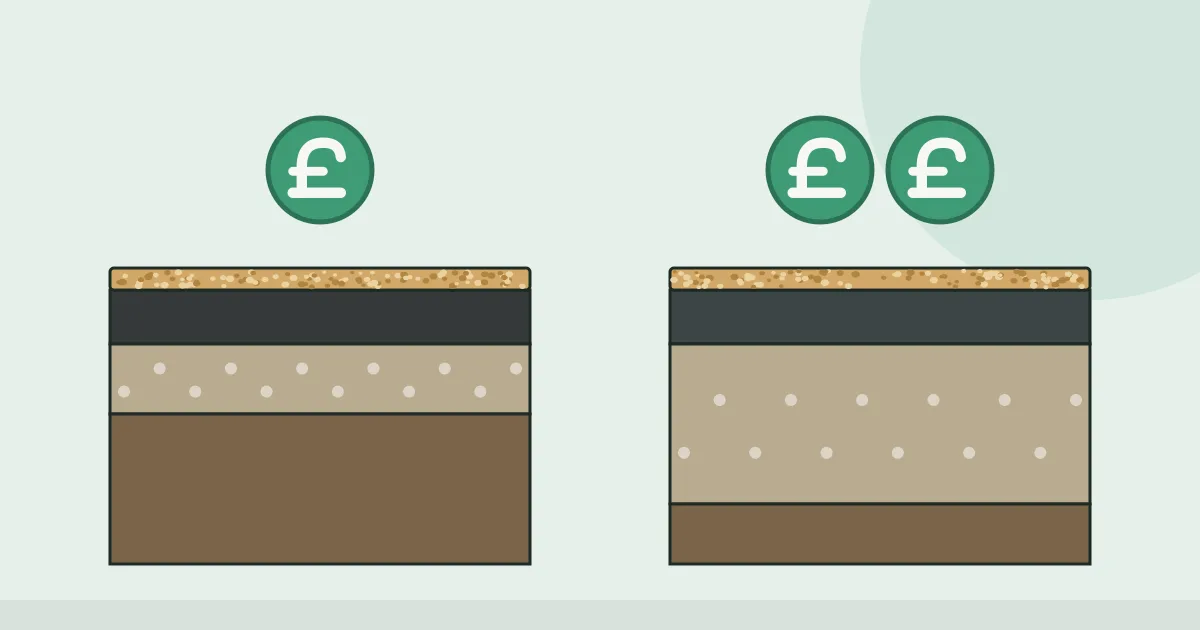
A resin bound driveway in the UK typically costs between £3,500 and £8,000. That puts it at the top of the range for the surfaces we cover. Unlike the others, though, its price isn't driven mainly by size. The biggest single factor is what's already underneath. Resin bound is a thin wearing layer, typically hand-trowelled at a depth of a few centimetres, and it needs a solid, stable base to sit on. If you already have one, you pay mostly for the resin layer. If you don't, you pay for a new driveway base first.
That's why the price bands below are split by scope rather than just by size, the same way they are on our resin bound driveways page.
Resin bound prices by scope
Typical UK prices for resin bound driveways. Actual quotes depend on area, aggregate choice, the condition of any existing base and access.
| Job scope | What's involved | Typical cost |
|---|---|---|
| Resurfacing an existing base (small) | A sound tarmac or concrete drive cleaned, repaired where needed, primed and overlaid with resin bound | £3,500 – £5,000 |
| Resurfacing an existing base (medium/large) | The same approach over a two-car drive or a full frontage, with edging details and more aggregate | £5,000 – £6,500 |
| New base plus resin bound surface | Old surface removed, sub-base built, a new porous tarmac or concrete base laid and cured, then the resin layer | £6,500 – £8,000+ |
Can your existing drive be the base?
This is the question that decides whether you're in the first two bands or the third, so it's worth understanding before any installer visits. An existing tarmac or concrete drive can usually take a resin overlay when all of these are true:
- It's structurally sound. There's no widespread cracking, sinking or movement, just a surface that looks tired, faded or patchy.
- It still sheds water. It hasn't lost its fall, and puddles don't sit in the same places after rain.
- The level works. Adding a resin layer won't bring the surface up against the damp-proof course, door thresholds or garage door.
- Any cracks are fine surface ones that can be repaired, not wide cracks coming up from a failed base.
If the existing drive fails any of these, resin laid on top will usually reflect the problem back through the new surface within a few seasons. Cracks in the base become cracks in the resin, and sunken areas become sunken resin. Our checklist of signs you need a new driveway helps you tell a tired surface from a failed base before you get quotes.
A resurfacing quote that's far below the others may assume your drive is a suitable base without anyone having checked it properly. Ask each installer to state what repairs to the existing surface are included, and what happens to the price if more is found once it's cleaned.
What else moves a resin quote
- Aggregate. Natural stone blends vary in price, and larger or unusual stones cost more than standard fine blends.
- UV stability. Resin systems differ in how well they resist yellowing in sunlight, and UV-stable resins cost more. Ask which is being quoted.
- Edging and details. Borders, contrasting bands, steps and awkward edges around drains or gates all add hand-finishing time.
- Weather. Resin needs dry conditions and suitable temperatures to cure, so installers may be less flexible on dates in winter.
Resin bound, planning and resin bonded
Resin bound is permeable, so in England a resin bound front drive is generally exempt from the 5 square metre planning rule for impermeable surfaces. That only holds if the base underneath drains too. A resin layer over a solid, non-draining base loses some of that benefit. The gov.uk guidance on paving a front garden sets out the rule for England, and the other UK nations set their own. Don't confuse resin bound with resin bonded. Bonded is a cheaper product where loose stone is scattered onto a resin coat. It sheds stones over time and isn't permeable in the same way. If a quote seems too good for resin, check which one it is.
How resin compares on cost
As a new-build drive from scratch, resin bound usually costs more than tarmac, concrete or gravel. Laid over a sound existing drive, it can compare well with digging out and starting again in block paving. Our guide to the types of driveway compares all six surfaces side by side.
Frequently asked questions
Is resin bound cheaper than block paving?
It depends on your base. Laid over a sound tarmac or concrete drive, resin bound can come in below a new block paving drive for the same area. Where a new base is needed first, resin is usually the dearer option.
Can resin be laid over block paving?
Generally it isn't recommended. The individual blocks can move slightly and the joints can show through as cracks in the resin. Most installers prefer a continuous tarmac or concrete base, which may mean lifting the blocks and laying a new base first.
How soon can I drive on a resin bound driveway?
It's usually walkable within a few hours and ready for vehicles within 24–48 hours, depending on temperature and weather. A new base laid underneath needs its own curing time first, which can add days to the overall job.
Why do resin quotes vary so much for the same drive?
Mainly because installers make different assumptions about the existing base, the resin system and the aggregate. One quote may include crack repairs and a UV-stable resin, another may not. Ask each installer to set out the base preparation, the resin type and the aggregate so you can compare like for like.
Ready to talk to a resin bound driveways specialist?
Get Free Quotes →