
We compare concrete, natural stone and porcelain slabs as categories, for one job: carrying a car. We don't name or rank manufacturers or stockists and haven't tested any products. Whether a particular slab is suitable for vehicles is something its maker should state, so check the product's own guidance before buying.
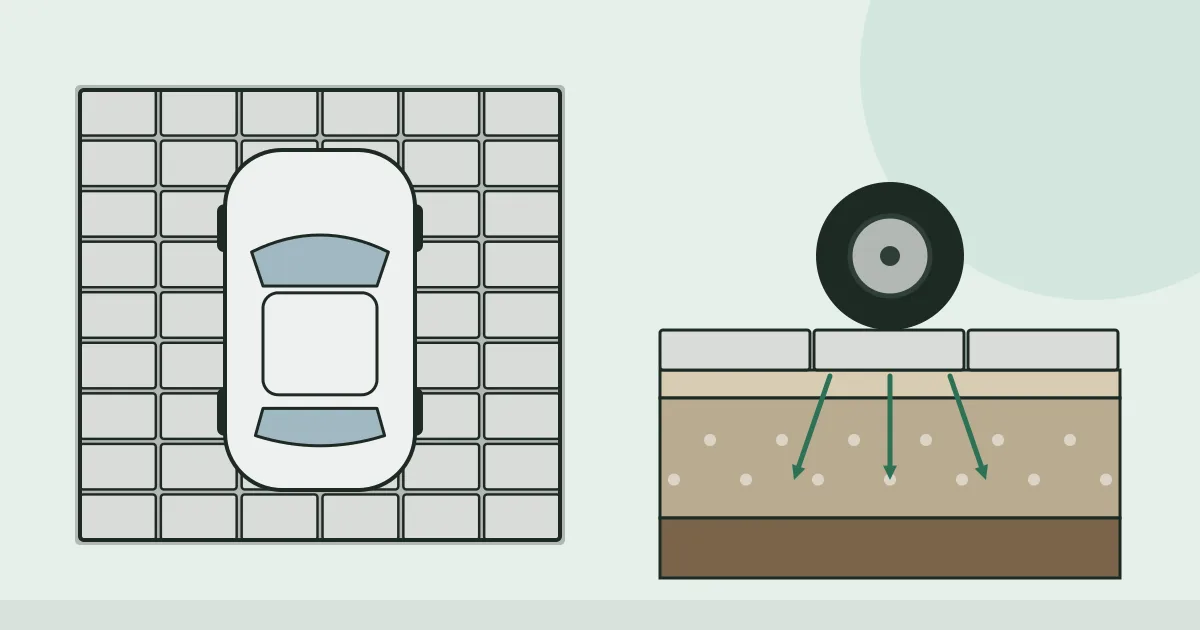
Yes, you can lay slabs on a driveway. Plenty of modern houses have slabbed drives, and porcelain in particular has made the look popular. What you can't do is take a patio, built for chairs and feet, and park a car on it. A car puts concentrated loads through four small contact patches, plus twisting forces every time the steering turns. Slabs used for driving on need a deeper base, full bedding, a suitable thickness and usually a smaller format than a patio would use.
That extra build is why the slabbed-driveway band on our patios and slab paving page sits above a patio of similar size. Our slab paving cost guide breaks the prices down.
The three slab types for vehicle use
Concrete, natural stone and porcelain slabs compared for use on a driveway. Suitability depends on the specific product and how it's laid.
| Concrete slabs | Natural stone | Porcelain | |
|---|---|---|---|
| Relative price | Lowest | Mid to high | Mid to high |
| For vehicles, look for | Thicker slabs made for driveways, not standard patio slabs | Thicker stone or smaller formats; setts for heavier use | Products the maker rates for vehicles, on a rigid, fully bedded base |
| Strength character | Fairly forgiving; thicker units carry load well | Varies by stone; softer stones mark and wear | Very hard and dense but can crack if any part is unsupported |
| Bedding | Full mortar bed | Full mortar bed | Full bed with a bonding primer on the back of each slab |
| Staining and upkeep | Can stain; colour fades slowly | Some stones stain and are often sealed | Resists staining well; no sealing needed |
| Grip | Usually textured | Riven stone grips well; sawn stone smoother | Choose a textured or slip-rated finish for outdoor use |
What changes when a car is involved
- Sub-base depth. A patio can sit on a fairly shallow sub-base. A slab driveway needs one designed for car loads, the same as any other drive. Our guide to the driveway sub-base covers typical depths.
- Full bedding, never dabs. Some patios are laid on a handful of mortar dabs under each slab rather than a continuous bed. Under a car that leaves unsupported areas that crack. Driveway slabs need a full, solid mortar bed.
- Thickness. Standard patio slabs are often too thin for cars. Driveway-grade concrete and stone slabs are thicker, and porcelain for vehicles should be specifically rated for it.
- Format. Large slabs look smart, but the bigger the slab, the greater the leverage when a wheel sits near one edge. Smaller formats, such as 600 x 300mm or less, spread loads better. Large-format slabs are also less forgiving to lay well.
- Edges. A strong, bedded edge course stops the outer slabs moving when wheels run onto them.
Concrete slabs
Concrete is the budget choice and the most forgiving. Driveway-grade concrete slabs and flags are made thicker for vehicle loads and come in textured and stone-effect finishes. They can stain with oil and fade over time like concrete blocks. Thin patio slabs from the garden centre are the ones to avoid under a car.
Natural stone
Sandstone, limestone and granite all appear on driveways. Granite is the hardest and best suited to vehicles; softer sandstones and limestones can mark, wear and stain, and are often sealed. Riven (split) stone has a natural texture that grips well but varies in thickness, which makes even bedding more important. Smaller formats or setts are a common way to use stone on a drive that sees daily traffic.
Porcelain
Porcelain is dense, hard, stain resistant and low maintenance, which makes it attractive for a drive. It's also brittle under point loads if it isn't fully supported, so installation is everything. It needs a full mortar bed on a rigid, well-compacted base, and each slab needs a slurry primer brushed onto its underside, because porcelain doesn't absorb water and won't otherwise bond. Some porcelain is made and marketed for vehicles; standard patio porcelain may not be, so check the manufacturer's guidance.
Joints and planning
Most slab drives are pointed with mortar or a jointing compound that sets solid, and the slabs themselves don't let water through. That makes a slab drive impermeable. In England, more than 5 square metres of it in a front garden, draining onto the road, needs planning permission unless that water is taken to a border, lawn or soakaway within your boundary. Some jointing compounds are permeable, but the slabs still shed most of the water, so drainage needs designing either way. Our guide to permeable vs impermeable driveways covers the options.
If the look of individual units matters but loads worry you, block paving gives a similar effect with smaller, thicker units that are made for cars. Our guide to the types of driveway compares slabs with all the other surfaces.
Frequently asked questions
Can you park on patio slabs?
Not usually on a standard patio. Patio slabs are often too thin, laid on spot bedding and over a shallow sub-base, and they crack or rock under car loads. A slab driveway needs thicker slabs on a full mortar bed over a driveway-depth sub-base.
Is porcelain strong enough for a driveway?
Porcelain rated by its manufacturer for vehicle use can be, provided it's fully bedded on a rigid, well-compacted base with a bonding primer. Standard patio porcelain may not be suitable, so check the product's guidance before buying.
What size slabs are best for a driveway?
Smaller formats generally cope better with vehicle loads than large slabs, because there's less leverage when a wheel sits near an edge. Formats around 600 x 300mm or smaller are common on slabbed drives.
Do slab driveways need planning permission?
In England, a slab drive in a front garden counts as impermeable, so more than 5 square metres draining onto the road needs planning permission. If the run-off goes into your own garden or a soakaway instead, no application is needed.
Ready to talk to a block paving driveways specialist?
Get Free Quotes →