
What Is a Concrete Driveway?
A concrete driveway is a poured, reinforced concrete surface laid over a prepared sub-base, finished either plain, stamped to look like stone or block paving, or with an exposed-aggregate finish that reveals the stone within the mix. It's one of the most durable driveway surfaces available, largely because it's poured as a single reinforced slab rather than built up from individual units, which makes it very resistant to rutting or sinking under vehicle weight when installed properly.
Concrete gets chosen a lot by people who want something genuinely low-maintenance and long-lasting, and it's especially popular for stamped or patterned finishes that give the look of block paving or natural stone at a lower cost and with far less ongoing joint maintenance.
Signs You Need a New Concrete Driveway
- Cracking across the slab, particularly wide or spreading cracks rather than fine surface hairlines
- Sections of the slab that have sunk, tilted or heaved unevenly relative to the rest of the driveway
- Surface scaling or flaking, often caused by frost damage or de-icing salt over successive winters
- Pooling water after rain, suggesting the original fall or drainage has failed
- A faded, stained or badly worn stamped or coloured finish that cleaning and sealing no longer improves
Concrete Driveway Finishes Explained
Concrete driveways aren't limited to plain grey — there are several finish options that change both the look and the price:
- Plain or brushed concrete — the most straightforward and cost-effective finish, with a light broom texture applied for grip while the concrete is still workable.
- Stamped (imprinted) concrete — patterns and textures are pressed into the surface before it fully cures, giving the appearance of block paving, cobbles or natural stone at a lower material cost.
- Exposed aggregate — the top layer of cement paste is washed or brushed away after pouring to reveal the decorative stone within the mix, giving a textured, non-slip surface.
Whichever finish is chosen, reinforcement (steel mesh or fibre) and correct slab thickness matter more to long-term durability than the surface treatment itself, particularly on a driveway that'll carry a car every day.
What to Include When Asking for a Quote
Give a rough size and sketch of the area, what surface is there now, and how you intend to use the finished space, since this is what most quotes are actually priced against. Flag anything that could affect access — a narrow side entrance, overhead cables, a shared driveway — and mention drains or level changes nearby, so quotes for different surface materials are actually comparing like for like.
For concrete driveways, have the contractor confirm in writing exactly which system and materials are being used, since specifications vary between suppliers. The spec should cover the sub-base depth, edge restraints or kerb line, how the finished surface manages rainwater, and whether reinstatement of the surrounding lawn, fencing or paving is included.
When comparing quotes side by side, check they're covering the same ground: excavation depth, sub-base specification, surface material, edging and drainage should all be named, not folded into a single price per square metre. Ask each contractor to confirm separately whether spoil removal, permits and reinstatement around the edges are included, since this is where otherwise-similar quotes can differ most.
How Much Does a Concrete Driveway Cost?
| Driveway size / finish | Typical cost |
|---|---|
| Small, plain or brushed finish | £2,000 – £3,200 |
| Medium, plain or brushed finish | £3,200 – £4,400 |
| Large, or stamped/exposed-aggregate finish | £4,400 – £5,500+ |
These are ballpark UK figures rather than a firm quote — finish, reinforcement, slab thickness and how much groundwork and formwork is needed all move the price. Get a few quotes from local contractors to see what it'll cost for your driveway specifically.
The Concrete Driveway Process: What to Expect
- Site survey and quote. The contractor assesses ground conditions, confirms finish and discusses drainage and edging.
- Excavation. The existing surface is removed and the ground dug out to the depth needed for the sub-base and concrete slab.
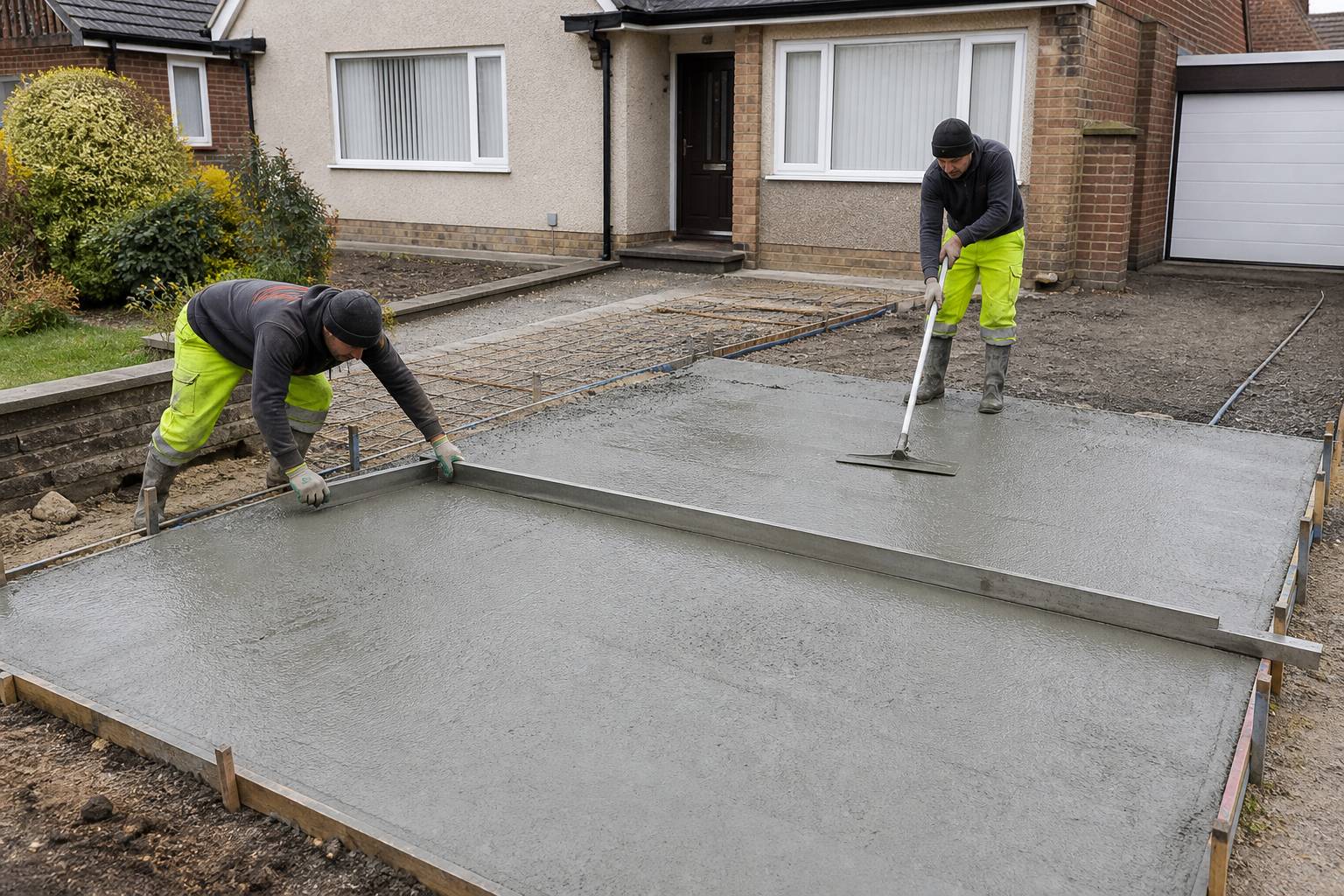
- Formwork and sub-base. Timber or metal formwork is set up to shape the edges, and a compacted stone sub-base is laid underneath.
- Reinforcement and pouring. Steel mesh or fibre reinforcement is placed, then the concrete is poured, levelled and finished to the chosen texture or pattern.
- Curing. The slab is left to cure, usually walkable within a few days but not ready for regular vehicle weight for around a week, depending on weather and mix.
Planning Permission for a Concrete Driveway
Standard poured concrete is an impermeable surface, so the same front-garden rule applies as with tarmac: in England, laying more than 5 square metres of new concrete in a front garden that drains onto the pavement or road requires planning permission. Below that size, or where the driveway is designed to drain onto your own garden or into a soakaway rather than the road, it's normally permitted development and no application is needed. Some contractors can incorporate permeable jointing or channel drainage into a concrete driveway design specifically to avoid triggering this rule, which is worth asking about at quote stage if you want to avoid the planning process. A dropped kerb where the driveway meets the road is a separate permission from the council's highways department. See the gov.uk guidance on paving a front garden for full detail.
How to Choose a Concrete Driveway Contractor
- Ask what concrete mix, slab thickness and reinforcement they're quoting for — thin, unreinforced slabs are a common cause of early cracking
- Check whether the price includes formwork, edging and disposal of the old surface, or if these are extra
- Confirm how drainage and fall are handled, especially if the area is close to the 5 square metre planning threshold
- Ask to see previous concrete driveways they've completed, ideally a few years old, to see how the finish has aged
- Get at least two written quotes and check both specify the same slab thickness and reinforcement
Frequently Asked Questions
Does a concrete driveway need planning permission?
Only in some cases. In England, you'll need planning permission if you're laying more than 5 square metres of new concrete in a front garden that drains onto the road rather than your own garden or a soakaway. Below that size, it's usually permitted development.
How long does a concrete driveway last?
A properly reinforced concrete driveway typically lasts 25–30 years, making it one of the longer-lasting surfaces, though it can be prone to cracking if the sub-base or reinforcement wasn't done correctly.
Can concrete driveways crack?
Yes, cracking is the most common issue, usually caused by an inadequate sub-base, insufficient reinforcement, or the ground moving beneath the slab. Control joints are normally cut into the concrete to help manage where cracks form.
How much does a concrete driveway cost on average?
Most UK concrete driveways cost between £2,000 and £5,500, depending on size and finish, with stamped or exposed-aggregate finishes at the higher end. Get a free quote from local installers for an exact price.