
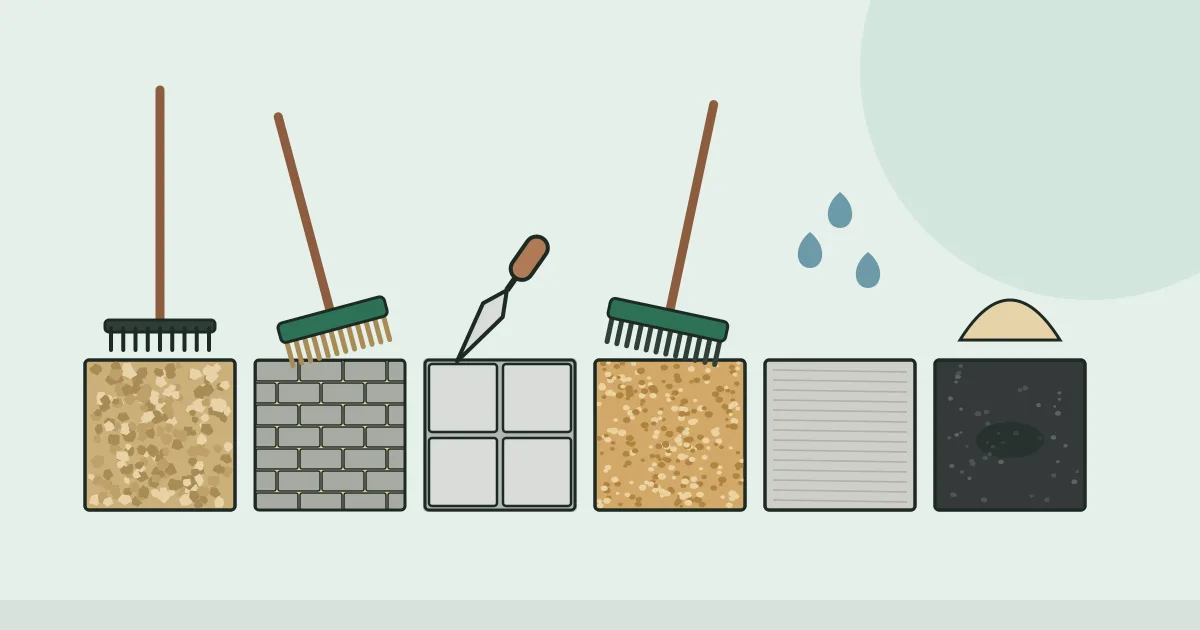
Every driveway needs some looking after, but not the same kind. Gravel needs stone put back. Block paving needs its joints kept full. Resin needs its pores kept open so it still drains. Tarmac and concrete need very little most years, until a spill or a hard winter catches them out. Below is what each of the six surfaces we cover actually needs, roughly how often, and the things that do more harm than good.
One rule first, because it applies to almost every surface: be careful with pressure washers. Held close, a high-pressure jet strips jointing sand out of block paving, blasts the pointing out of slabs, roughens tarmac and can loosen the stone in resin. A wide fan, held back, used sparingly, is a different thing from a narrow lance at full pressure.
Upkeep at a glance
Typical routine maintenance for each driveway surface. Frequencies are a rough guide and depend on use, shade, trees and weather.
| Surface | Routine job | Roughly how often | Bigger job |
|---|---|---|---|
| Gravel | Rake level, pull weeds | Every few weeks to a few months | Top up stone every 3–5 years |
| Block paving | Sweep, weed joints | A few times a year | Re-sand joints after deep cleaning, or when sand has washed out |
| Slabs | Sweep, clear moss and algae | A few times a year | Repoint failed joints; seal some natural stone |
| Resin bound | Sweep, clear leaves | Monthly in autumn | Gentle clean to unclog pores |
| Concrete | Sweep, hose down | As needed | Reseal stamped or coloured finishes every few years |
| Tarmac | Sweep, clear spills quickly | As needed | Repair edges and small cracks before they spread |
Gravel: keep it level and keep it in
Gravel moves. Tyres push it to the sides, turning cars dig it out, and some goes off on shoes and into the lawn. A rake every so often puts it back before thin patches show the membrane underneath. Most gravel drives need a fresh top-up of stone every three to five years, sooner where cars turn on the spot. Match the existing stone as closely as you can, because a different size or shape mixes unevenly.
Weeds in gravel usually root in debris sitting on top of the membrane, not through it, so raking out leaf litter helps. Check the edging too. Once timber boards rot or a kerb loosens, stone starts escaping faster. If you're choosing stone for a top-up, our comparison of gravel types for driveways explains why angular stone stays put better.
Block paving: the joints are the job
The sand in the joints isn't just filler. It locks the blocks together and stops them shifting under tyres. When it washes or blows out, blocks loosen and weeds move in. Brushing dry kiln-dried sand into the joints when they look low keeps everything tight. Always re-sand after any deep clean, because cleaning removes sand whether you mean it to or not.
Moss and weeds in the joints are mostly cosmetic at first, but their roots open the joints up over time. Regular sweeping with a stiff brush and pulling weeds while they're small does more than an annual blitz. Concrete blocks fade with age in a way clay pavers don't; our comparison of block paving materials covers that difference.
Slabs: pointing and, sometimes, sealing
On a slab driveway or patio, failed pointing is the first thing to go. Cracked or missing mortar lets water under the slabs and gives weeds a foothold. Raking out the loose pointing and refilling it is a small job if done early. Left, it lets slabs start to rock.
Sealing depends on the slab. Porcelain is dense and doesn't need it. Some natural stones, especially lighter sandstones and limestones, stain more easily and are often sealed to make cleaning easier, though sealing changes the look of some stone, so test a spare first. Concrete slabs are rarely sealed on a domestic drive.
Resin bound: keep it draining
Resin bound is low maintenance, but it isn't no maintenance. Its value is that water drains through it, and the tiny gaps between the stones can slowly fill with silt, leaf mould and moss. A regular sweep, especially in autumn, stops organic matter rotting into the surface. A gentle clean with a stiff brush and water, or a low-pressure wash held well back, unclogs it when it starts to puddle.
Avoid scraping snow shovels hard across it, and clean up oil and fuel quickly, as some can mark the resin. If your resin was laid over an old tarmac or concrete base, the drainage depends on that base too; our guide to resin over an existing driveway explains why.
Concrete: salt, sealing and joints
Plain concrete needs very little beyond a sweep and the odd hose-down. Stamped and coloured concrete usually has a sealer on top that wears off over time, especially in the wheel tracks, and resealing every few years keeps the colour and the protection. Exposed aggregate is less fussy but can lose stones at the surface if it's cleaned too aggressively.
The main winter risk is scaling, where the top layer flakes off. Freeze-thaw and de-icing salt are the usual causes, and young concrete is most vulnerable, so many installers advise against using salt on a drive in its first winter. Keep the control joints clear of weeds too. Our comparison of concrete driveway finishes covers which finishes need resealing.
Tarmac: spills and edges
Tarmac is bound with bitumen, and petrol, diesel and oil dissolve bitumen. A small drip left to soak in softens the surface and leaves a weak spot that breaks up under tyres. Blot spills quickly with something absorbent, such as sand or cat litter, then sweep it up.
The edges are tarmac's weak point, especially where there's no kerb or the kerb has loosened. Avoid driving over unsupported edges, and get small cracks and broken edges repaired before water gets in and freezes. New tarmac is soft in hot weather for the first summer, so avoid turning wheels on the spot and watch for car jacks, motorbike stands and furniture legs.
If you're re-sanding the same sunken patch every year, or a drive puddles however clean it is, the problem is probably under the surface rather than on it. Our checklist of signs you need a new driveway helps work out which, and our guide to the types of driveway compares upkeep across all six if you're choosing a new surface.
Frequently asked questions
Can I pressure wash block paving?
You can, but carefully. A high-pressure jet strips the jointing sand, so keep the lance well back, use a wide fan or a rotary surface cleaner, and always re-sand the joints with kiln-dried sand once the paving is dry.
How often should a driveway be sealed?
Most surfaces don't need sealing. Stamped and coloured concrete usually needs resealing every few years, and some natural stone slabs benefit from it. Block paving can be sealed to help hold the joint sand, but it is optional.
Does resin bound need maintenance?
A little. Sweep it regularly, clear leaves before they rot into the surface, and give it a gentle clean if water starts to sit on it. The aim is to keep the gaps between the stones open so it keeps draining.
How do I get oil off a tarmac driveway?
Act quickly. Cover fresh spills with an absorbent such as sand or cat litter, leave it to soak up the oil, then sweep it away. Oil and fuel left on tarmac soften the bitumen and can lead to the surface breaking up.
Ready to talk to an asphalt/tarmac driveways specialist?
Get Free Quotes →